
AI changed what software can do. Now it's changing how you benefit from it.
Meet the Altoros Forward Deployed Engineering (FDE) model — the new engagement built around the AI-era capabilities for solving your business problem.
The engagement model the frontier AI labs run on — Forward Deployed Engineers are how Anthropic, OpenAI, and Palantir get deployments into production.

What you're paying for today, and what you're not getting.
Most AI initiatives are still bought the classic way: hourly time & materials, or a dedicated team you pay to ramp up and manage. It works for some kinds of work — but for getting your business problem solved with the help of AI, it has three structural problems that show up as overruns, frustration, and lost context.
Ticking off tasks, not owning the result.
A T&M team crosses out action items on your specification rather than owning the business problem. There's no result-orientation by design — you carry the risk that the finished checklist still doesn't move the outcome you actually needed.
Context lost in the handoffs.
When a team of 3–5 people is involved — BAs, PMs, architects, developers — the meaningful context gets diluted at every relay. Communication overhead grows, and the nuance of what you actually need erodes between the people who heard it and the people who build it.
Your IP leaks to the vendor.
Engineers work in the vendor's tooling, on the vendor's accounts, with prompts and context the vendor accumulates. When the engagement ends, the institutional knowledge walks out the door. You paid for the work; the vendor kept the leverage.
FDE and T&M aren't better-or-worse. They answer different questions.
Time & Materials is a legitimate product — it's the right fit when your actual need is a hiring conversion: you have the spec and you want hands under your direction. Altoros FDE is a different offer, with different qualifications, for prospects whose actual need is solving a business problem they don't yet have a spec for. Here's what each one commits to.
For when you have a business problem you believe AI can solve but can't get from idea to working solution fast enough: Altoros FDE delivers a validated, working AI solution in your production environment within ~8 weeks of discovery, at a total cost in the low-tens-of-$K, with a measurable improvement on a business metric you choose — your baseline vs. the post-deployment number.
Guarantee. The outcome bonus is paid only when the validation gate is met. If we don't move the agreed business metric within the timeline, you don't pay the outcome portion. Four dimensions are captured against a baseline taken before we build.
One senior engineer. A whole team's worth of capability.
We're not selling you one person for the price of four. Your FDE is one senior engineer equipped with proper AI expertise, agentic workflows, the reusable IP library Altoros has built, and on-demand access to the Altoros talent pool — so a single accountable contact delivers team-scale output against your chosen metric.
Tap a card to see what's behind it →
How an FDE engagement actually runs.
Fixed price for the outcome plus an outcome-based bonus, paid only when the validation gate is met. Concrete scope and price are agreed in Step 01 — no movement after kickoff unless you ask for it, in which case you get a transparent quote, never silent overruns.
Real engagements, real specifics.
We've been running the FDE model with real customers. Three recent engagements — anonymized, with the operational specifics kept real.
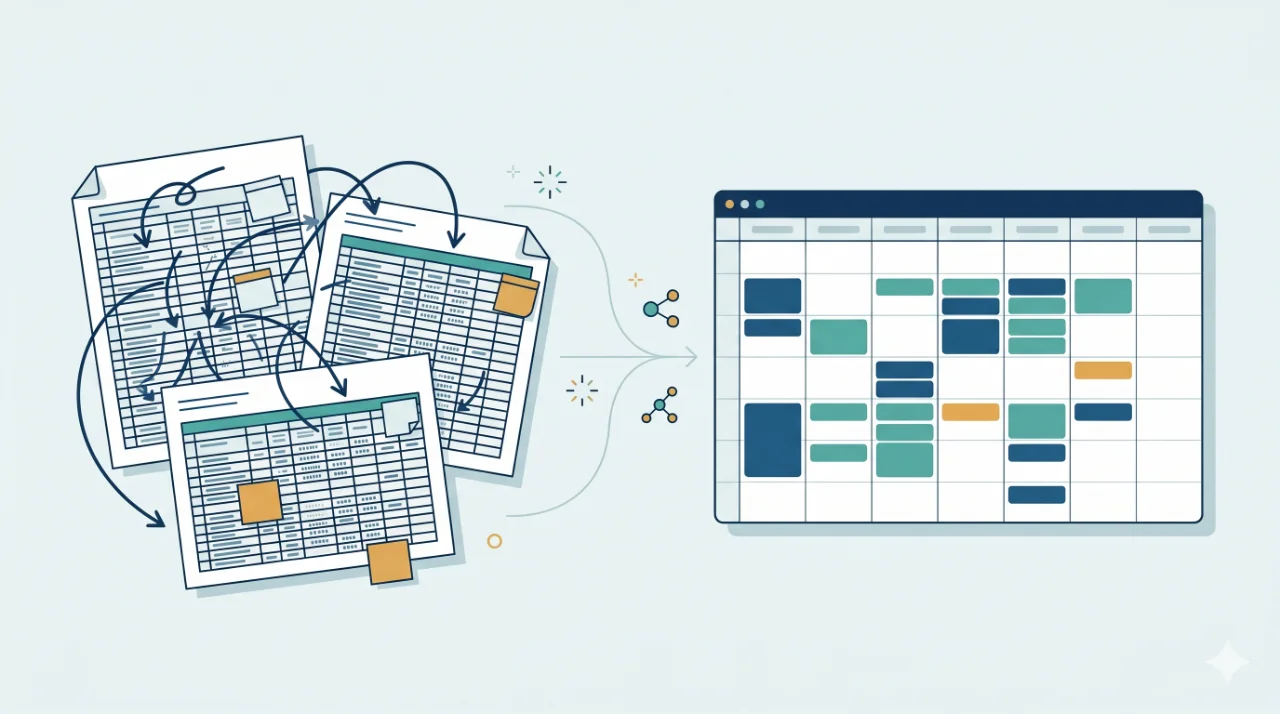
Scheduling that moves with reality.
Every job was written out three times — sales to survey to install — in spreadsheets kept in step by hand, on a plan where most dates never held. One embedded engineer owned the problem end to end: now a job is entered once and flows everywhere, the schedule bends with weather, contractors and the two-week cooling-off instead of breaking, and a live HubSpot link keeps the plan and the CRM in sync. The team got an honest answer to "when do my works start?" — and ~1 hour a week back.
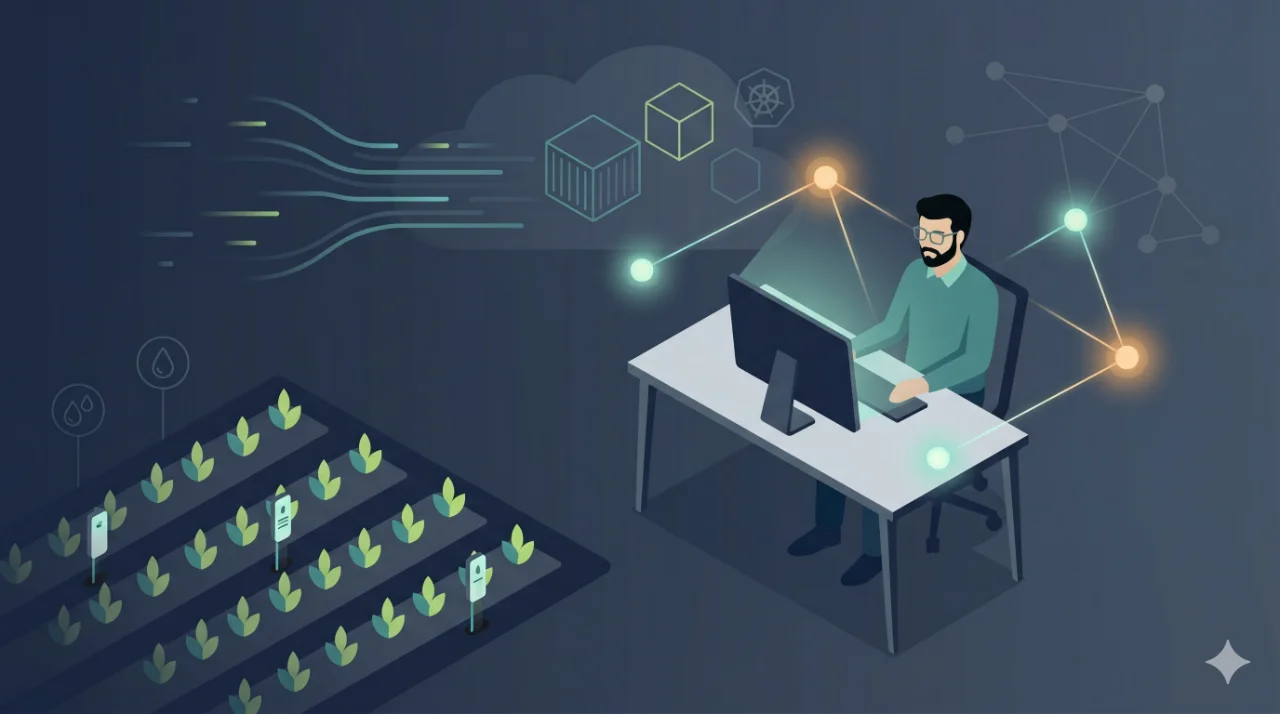
Roadmap capacity, without hiring.
The platform team was at capacity keeping the product scaling and running, with new features stalled on the roadmap. One embedded lead engineer takes carved-out scope from description to tested, deployable code via agentic delivery — inside the team's own sprints, repos, CI and AI accounts, with architecture decisions staying under their control.
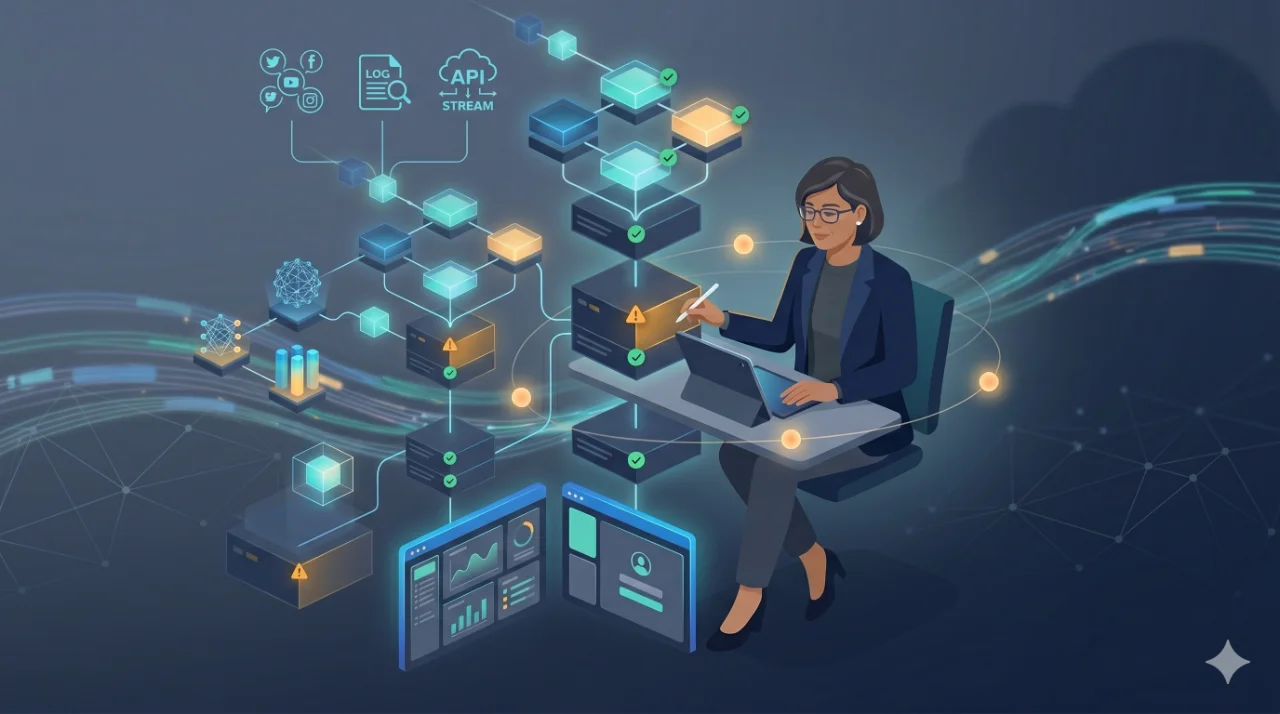
One owner for a whole platform.
With a first paying client about to onboard, a built-out data platform — pipelines, models, presentation layer and front end — needed consolidated upkeep instead of an internal lead juggling outside contractors. One embedded senior engineer owns it maintenance-first, turning recurring failures into automated checks so the same flat fee buys progressively more each month.
A fixed price, one point of contact — and a whole team's capability behind it.
When you pay this fixed price and talk to one FDE, you're not getting one pair of hands. You're getting one senior engineer equipped with proper AI expertise, agentic workflows, the reusable IP library Altoros has built, and on-demand access to the Altoros talent pool. That team-equivalent at a single-owner price is only possible because of the new technological capabilities we've leveraged at Altoros — it's the math working differently, not a discount.
One owner, team-scale delivery.
A single accountable engineer multiplies their capacity through agentic workflows and our bench — you get the throughput of a multi-person team without hiring or managing one.
Reusable IP that compounds.
A managed skill library, code patterns, and project templates that Altoros has built mean every new engagement starts further along the curve — you don't pay to build from scratch.
25 years of production engineering.
Shipping production software for enterprise customers since 2001, and access to the wider Altoros talent pool whenever an engagement needs a specific expertise. The model is new; the discipline behind it isn't.
Tell us your challenge.
Describe it in a few sentences — the outcome you need, what's in the way, and what you've tried. A senior engineer reads every one, and we reply within one business day.