

The engineer who moved in.
How one embedded forward-deployed engineer turned three hand-synced spreadsheets into a schedule that finally tells the truth.
Every week, the same job got written down three times. Once from the sales report into the survey sheet. Again into the install programme. A third time into the roughcaster's — three spreadsheets, kept in step by hand, by people who had better things to do.
And it still didn't hold. Jobs sat on dates that came and went. The plan wasn't really scheduling — it was a projection. You'd build a plan where most of it didn't happen, and you got the small slice that did.

Both usual options asked too much.
Hire & onboard a team
Months of time and a management headache the business didn't want.
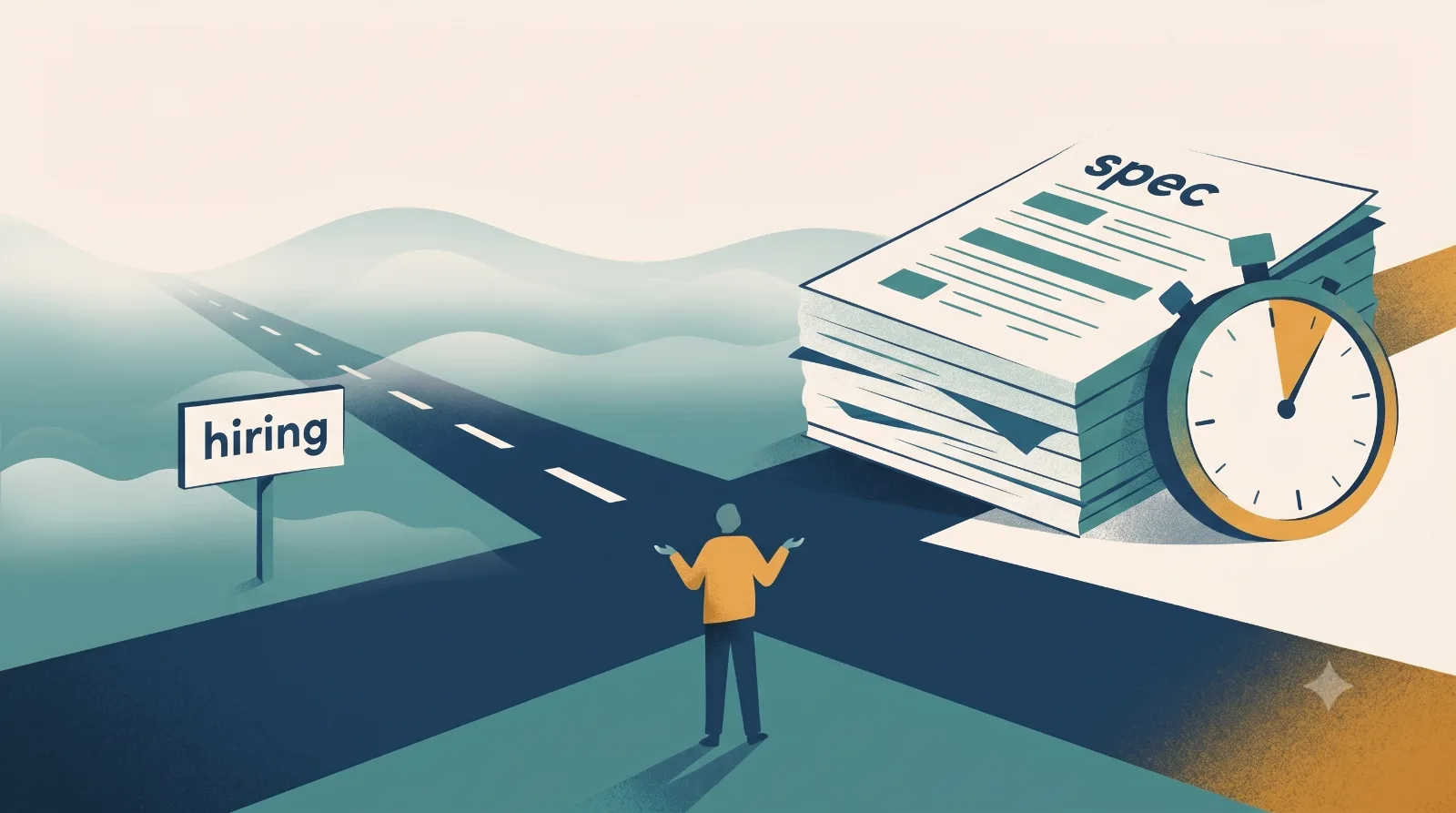
Hand a spec to a shop
Carry the risk yourself — and find the gaps halfway through, when they're expensive.
Both quietly demand that a coatings business become a software project manager. They wanted someone to own the outcome, not hand them a to-do list.
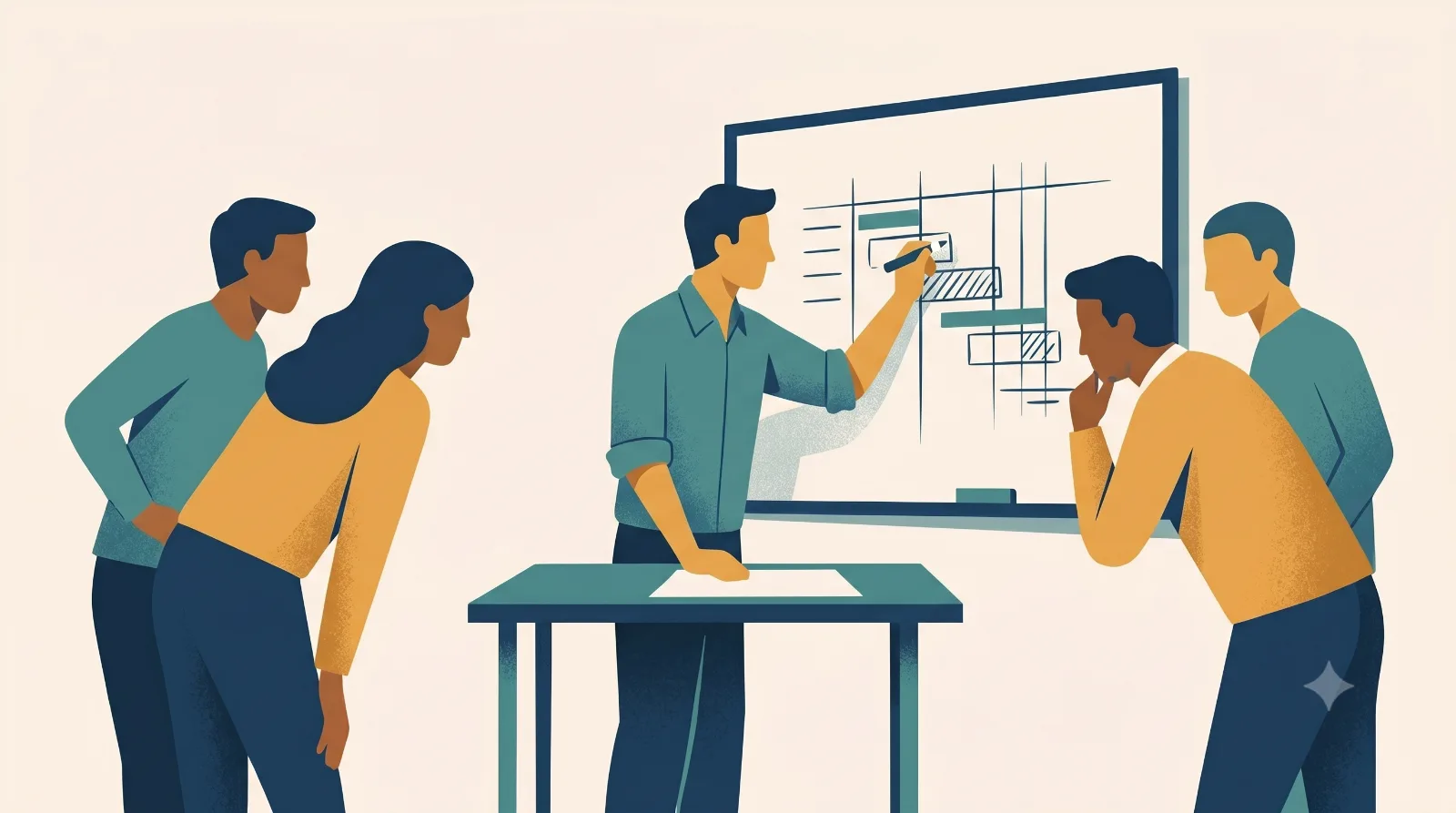
So one senior engineer moved in. The first move wasn't code — it was a whiteboard.
A single point of contact who owned the question from "what should we even build?" all the way to "is this actually working?" Map how the work really flows, agree the plan, then build — so nothing got discovered the hard way mid-project.
The throughput of a software team. The headcount of one person.
Behind that one engineer worked a set of controlled AI agents — building, testing and wrangling data during the project, then quietly running the routine scheduling chores once live, without anyone typing them in.
I need this too! →A rhythm set in.
"I need this." "That's not how it actually works." Adjust. Show again. The schedule slowly learned the business's true shape — that coating waits for dry weather while washing doesn't, that roughcasters run on their own diary, that a job can't even start until a two-week cooling-off passes, that wash and coat are separate visits with a gap between.


Two months in: a job entered once that flows everywhere.
Each part — survey, roughcast, wash, coat — moves on its own without dragging the rest. A live HubSpot link, so the schedule and the CRM stop drifting apart. And, at last, a real answer to "when do my works start?" It won't control the weather or free up a roughcaster — but it turned an impossible plan into a workable one.
That's the whole idea of a forward-deployed engineer. Not hours rented under your direction — a problem, owned end to end, by someone accountable for solving it.
It aligns with how I see the business going — and having controlled agents handle the routine work in the background, without manual input, is exactly what we wanted.
I need this too!
Describe the outcome you need — we'll come back with how a forward-deployed engineer would own it, on a fixed price paid for the result.
Explore the engagement model → FORWARD-DEPLOYED ENGINEERING