
Protofire runs its billing reconciliation cycle on a Claude agent in Slack
The slowest step of Protofire's billing reconciliation cycle went from hours to minutes, on an agent built end-to-end with Claude and shipped from first commit to a deployed service in seven days.
- Customer
- Protofire
- Industry
- Technology
- Use case
- Internal operations agent: automated time reporting reconciliation and billing readiness, delivered inside Slack.
- Built with
- Claude Code for the build. The Claude API in production (model claude-sonnet-4-6).
drafting the per-person reconciliation messages and filling the reconciliation documents
deploy scripts, a systemd listener, and an eleven-page user guide out in the same week
The problem
Protofire bills clients by the hour, so every invoice waits for the reported hours to be reconciled. People forget to report, over-report, or miss entries, and the knowledge of what normal looks like lived in a few heads. Reconciliation sat directly on the revenue path, and no system owned it.
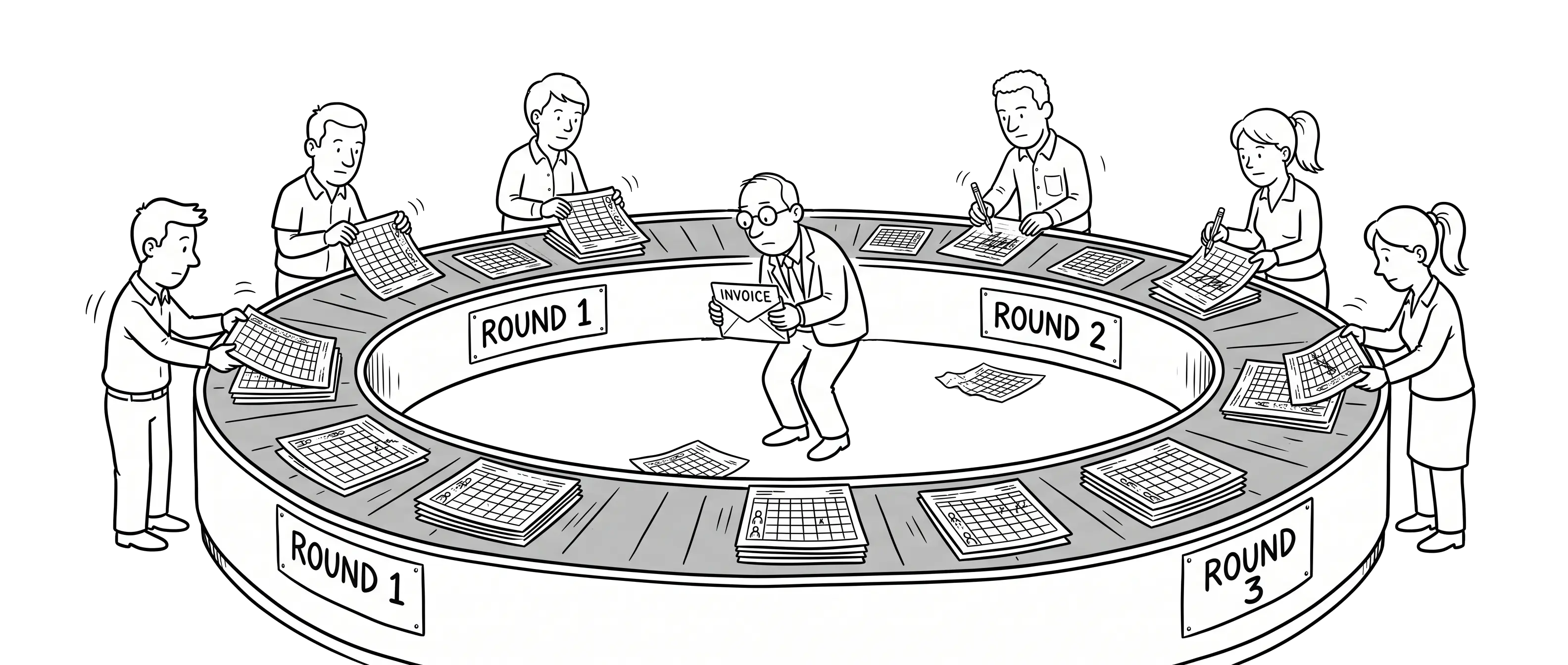
Every billing cycle started with thirteen spreadsheets sent to project managers by hand, followed by two to three rounds of corrections, and invoices landing three to five days late. The work pulled in two functions, Finance and the resource managers, every billing period before a single invoice could go out.
How the engagement ran
Altoros brought a forward-deployed engineer who started with discovery rather than code: interviews with the finance lead, resource managers, the billing specialist, and the developers, mapping the process as it actually runs rather than as documented. The economic case was taken to the finance lead before the build started.
Altoros then delivered the agent end-to-end on Claude: a deterministic core with Claude used only where language is genuinely needed, an eval suite written on the first day of the build, before the classifier it grades, deployment inside the customer's own perimeter, and a phased rollout with adoption materials.
What changed
With Claude, Protofire:
What this does not do
The agent flags and drafts. People decide. A share of the manual work stays with people by design.
Hours collection was already automatic. The agent did not replace it — what changed is the reconciliation step that follows.
"Every billing period used to start with my team sending out spreadsheets and waiting for corrections to come back; now that pass runs on its own in Slack and we only deal with the people it flags."
Delivery methodology name
Gate-First Delivery (Ground, Assemble, Test, Embed). We ground the work in the process as it actually runs, assemble a deterministic core with Claude used where language is needed, write the test gate before the output it grades, and embed the result inside the customer's own perimeter with a phased rollout.
Claude Code for the build. The Claude API in production (model claude-sonnet-4-6), called as a subroutine from deterministic Python: event interpretation, per-audience message writing, and a question-answering mode in direct messages.
I need this too!
Describe the outcome you need — we'll come back with how a forward-deployed engineer would own it, on a fixed price paid for the result.
Explore the engagement model →